Bibliography

Kidd draws from the language of biology and microscopy: the cellular rhythms, organic geometries, and fossilised remnants that speak of life’s continuity and fragility. What is usually hidden to the human eye cell structures, microscopic organisms, molecular forms, is brought to the surface and given scale, presence, and material voice.

Living on the Pembrokeshire coast, Kidd is also influenced by it’s ancient geology and the elemental processes that shape it. The rugged cliffs, folded rock strata, and weathered shorelines hold traces of deep time, records of pressure, movement, and transformation laid down over millennia. The landscape is sculpted not only by grand geological forces but also by the slow, persistent action of wind, rain, and saltwater. The erosion of stone, the layering of sediment, and the fractal patterns etched into rock by the sea all echo the microscopic structures she explores in her work. There is a profound symmetry between these natural processes, between the way a coastline fractures and the way a cell divides. Both are governed by invisible forces, quietly shaping the form and function of the world around us. Kidd’s sculptures attempt to reveal these shared rhythms across vastly different scales, offering a material language through which to sense the continuity between body and earth, biology and geology, surface and depth.
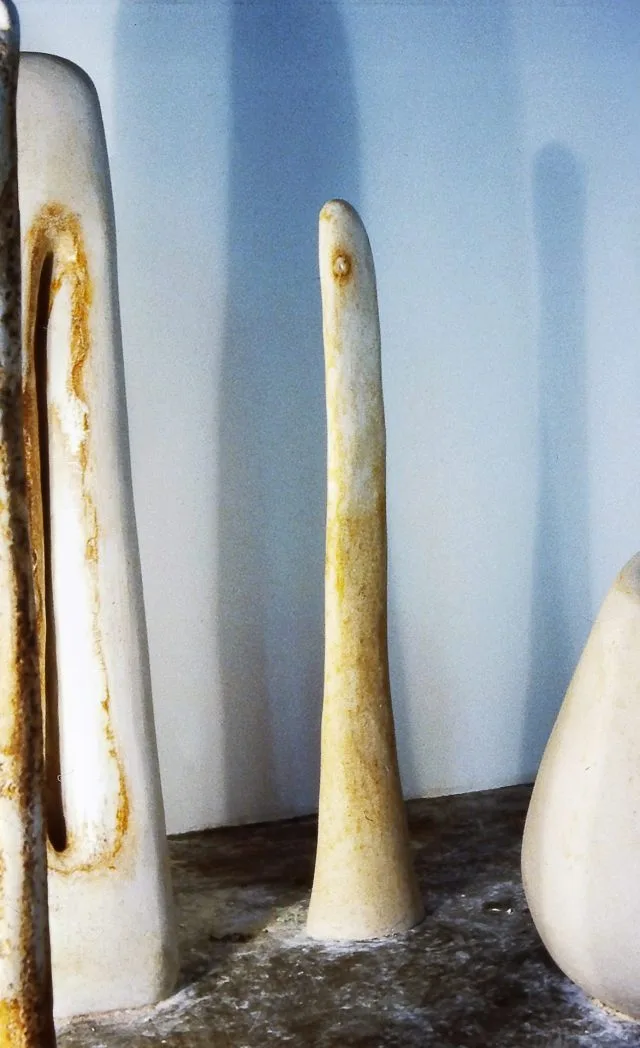
Isobel Kidd’s sculptural works

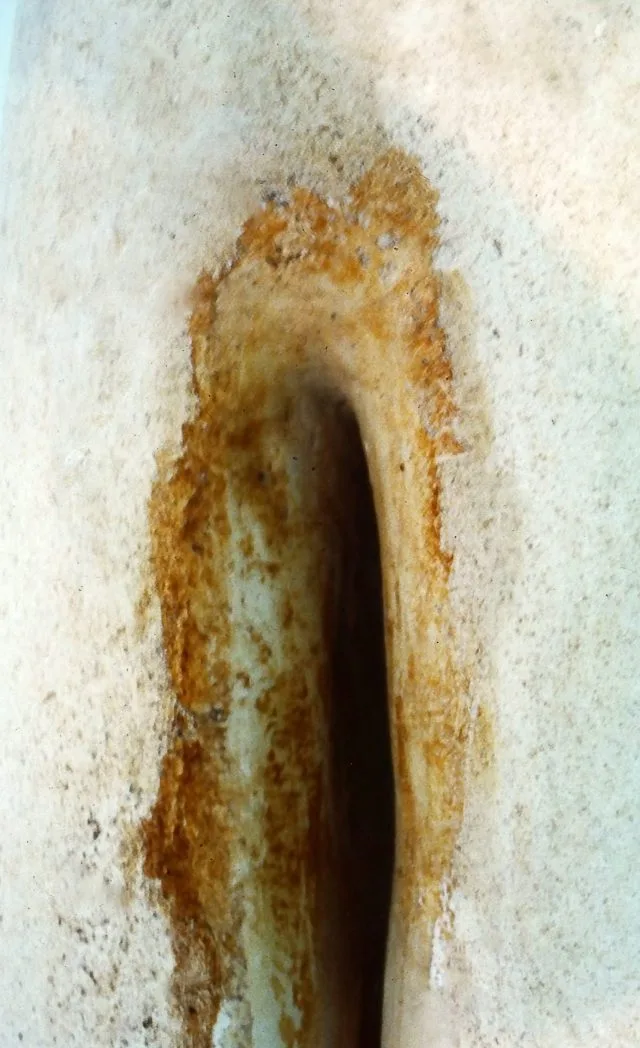
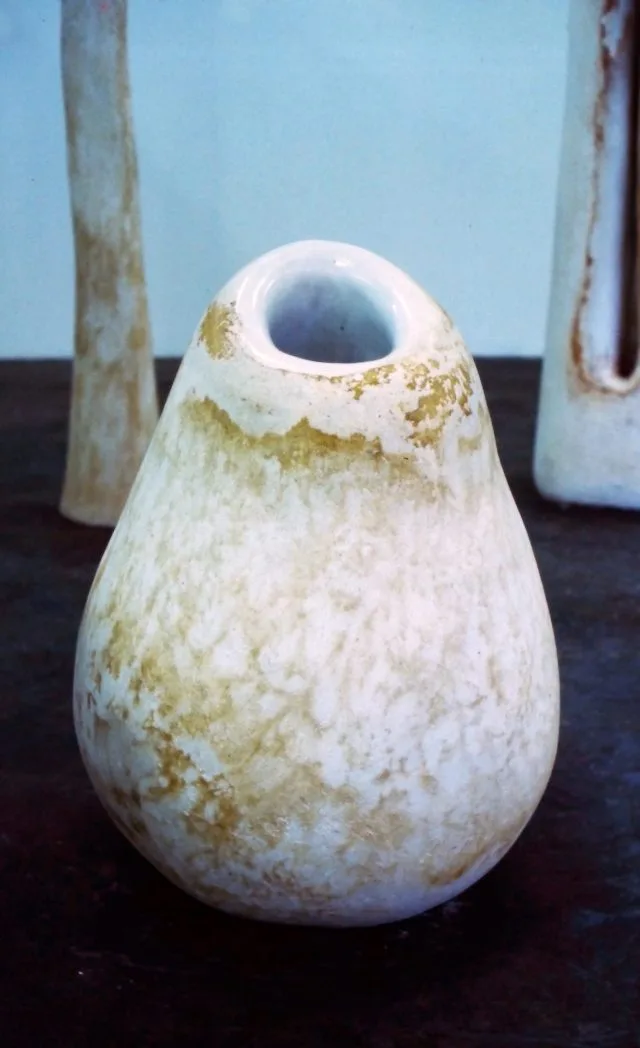
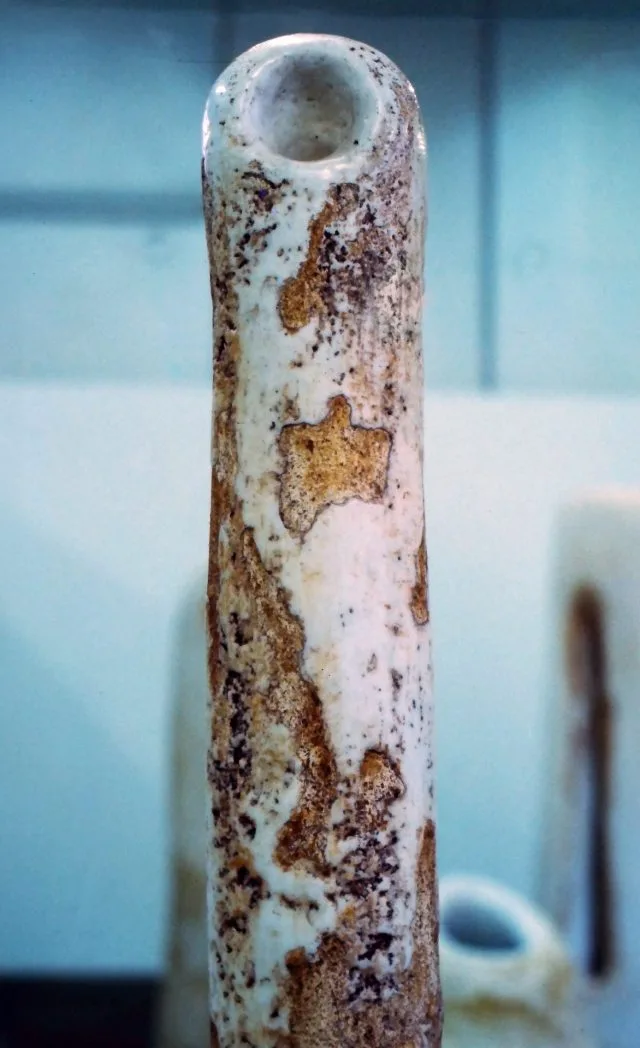
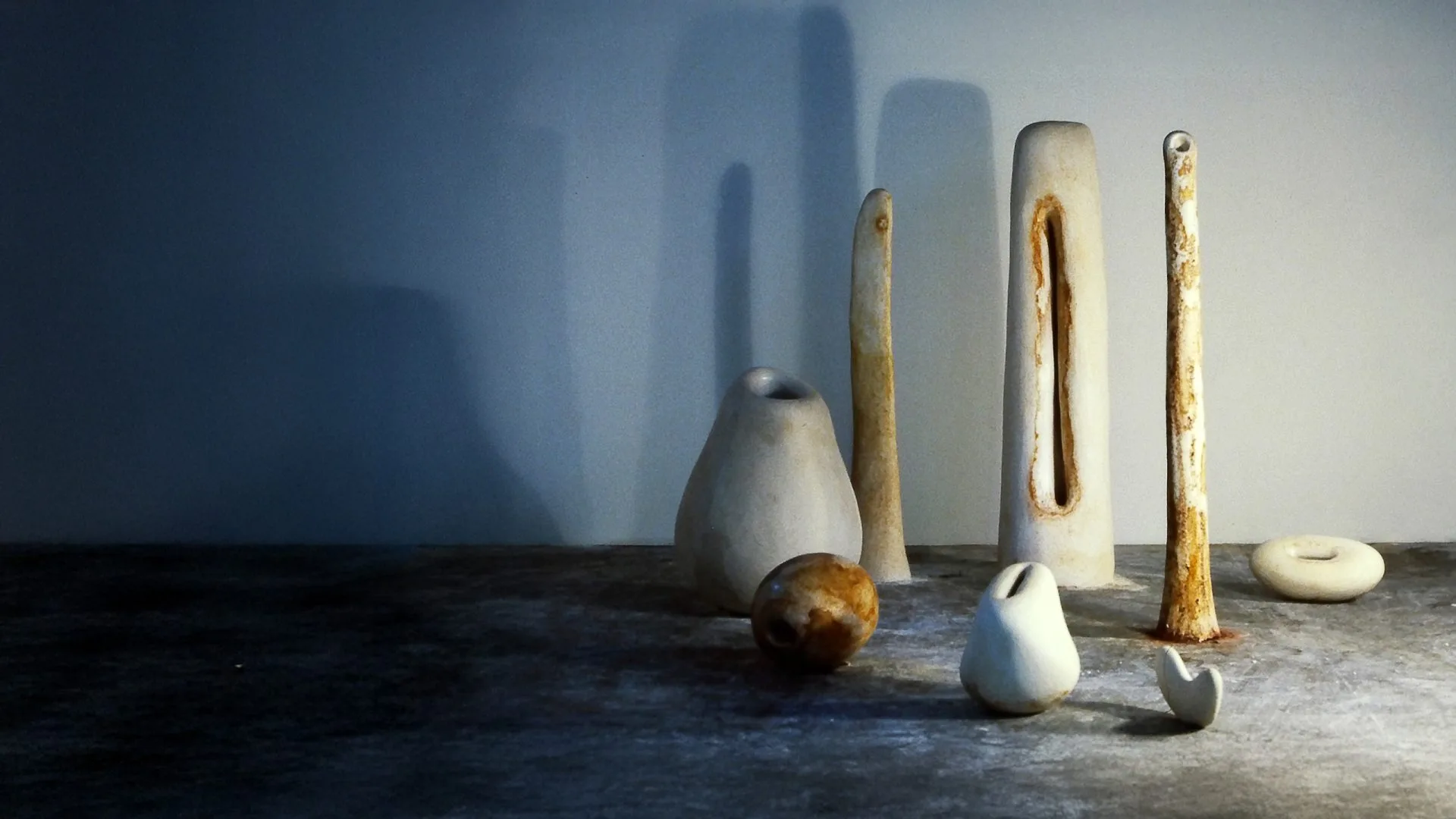
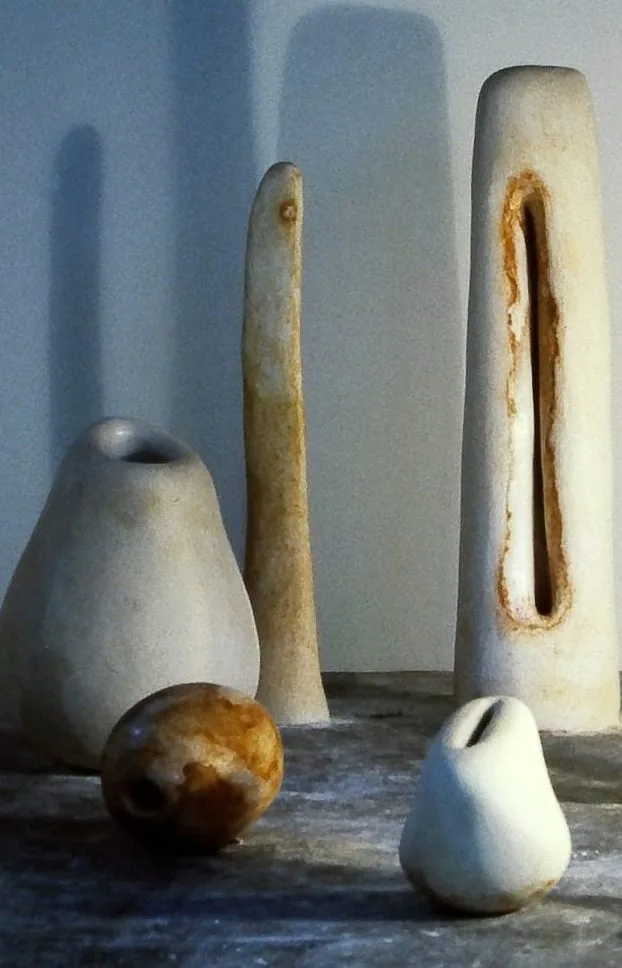
are made from materials traditionally associated with permanence, purity, and reverence. Her monumental vessels are containers, protective forms, imagined sanctuaries that might preserve life, memory, or knowledge in times of collapse. They draw on archetypal images: the ark, the womb, the reliquary.

The richness of her materials

the use of wax, the veining of stone and the richness of gold leaf, heightens the sense of sanctity, inviting the viewer to reflect on what is truly sacred in a world increasingly driven by extraction and disposability. Yet, Kidd’s use of organic and inorganic materials is never merely aesthetic. Her palette, rooted in the colours of bone, sand, ash, sediment and iron ore, anchors the work in the earth, evoking a sense of geological time and environmental change.

Isobel Kidd believes deeply in the responsibility of the artist to reflect the urgent realities of our time.

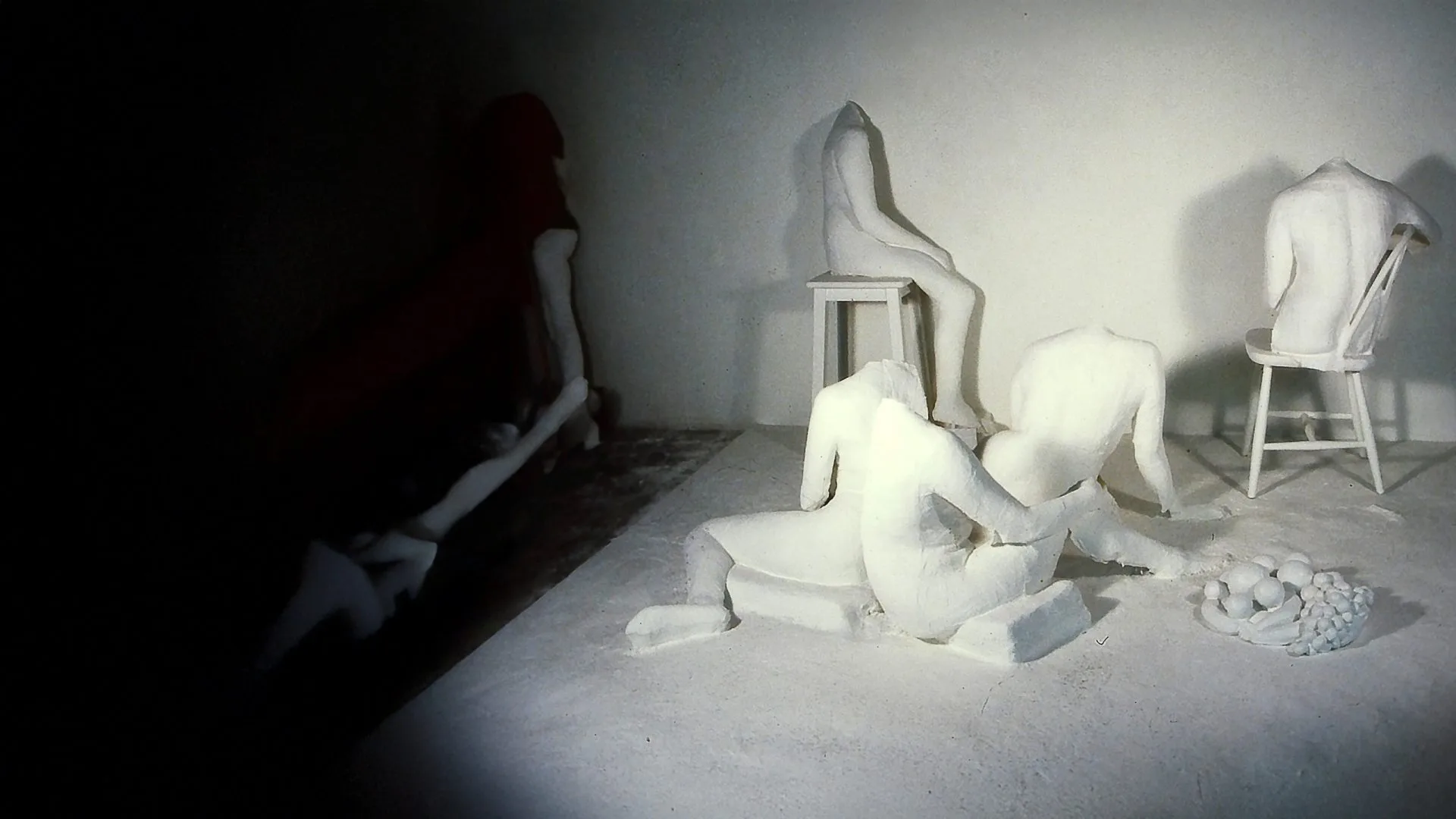
In an age marked by global instability, environmental degradation, and the threat of conflict, she uses her sculptural practice as a space for both reflection and action. Her work challenges viewers to look beyond surface beauty, to confront the fragility of life, the interdependence of natural systems, and the irreversible damage caused by human hands.

Her work urges viewers to engage with the deeper, more vulnerable aspects of existence - urging them to move beyond mere aesthetic appreciation.

Kidd’s sculptures are not just objects of visual beauty but powerful metaphors for the fragility of life it’self. They invite us to acknowledge the delicate balance of nature, the invisible forces that sustain it, and the collective responsibility we all share in preserving what is most precious. In her monumental forms, there is an implicit call to action: a reminder that, in the face of increasing global crises, we cannot afford to remain passive. Kidd’s art compels us to consider how we might protect and nurture that which is at risk of being lost, urging a broader sense of stewardship and care for both the natural world and future generations.

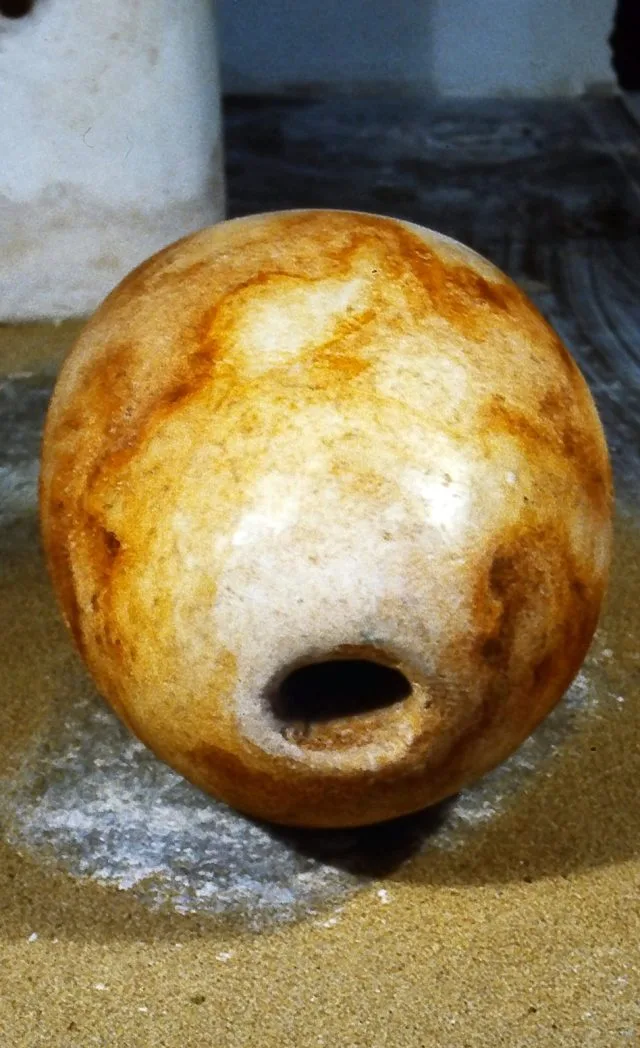
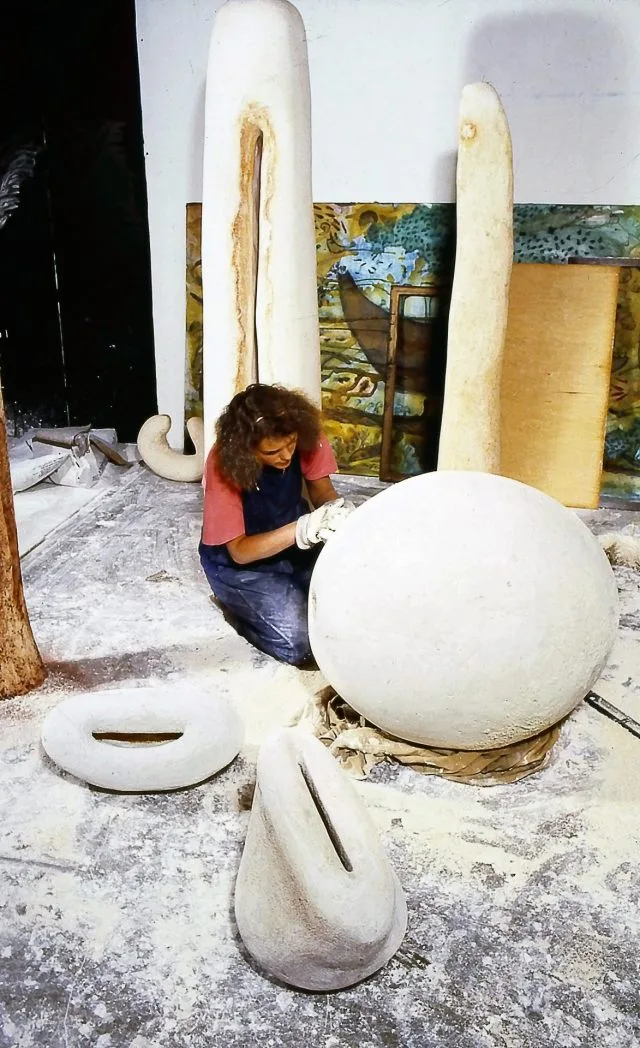
Monumental marble egg forms, smooth and luminous, speak of life’s origins and the delicate potential of renewal.

Visit the studio

The gallery displays Isobel Kidd’s sculptures, metal wall installations, wax drawings and prints offering visitors an insight into the depth and range of her practice.

Separated from the adjoining studio by a glass wall, the space allows viewers to safely observe the artist at work.

Through this open design, the gallery and studio exist in quiet dialogue; one showing the process of making, the other the power of the finished form. Together, they create an experience that reveals both the discipline and the poetry behind Kidd’s sculptural vision.

Contact Us

If you have any questions, get in touch by completing the form.

If you’d prefer to call us, our number is 07377 953 423.

We look forward to hearing from you.